The estate
An exceptional place rooted in Mediterranean landscapesFrom Montpellier, capital of Languedoc, just look north: the Pic Saint-Loup stands facing you. In this legendary setting, among garrigue, vineyards and limestone cliffs, lies Domaine Uma.
The main vineyard islands in the Pic Saint-Loup appellation stretch across north-facing slopes, cut through by the Rieufrech river. The vineyard divides into three terroirs with distinct geology, for wines suited to every occasion.
The reds are born from Syrah, Grenache and Carignan. The whites reveal themselves through Rolle, Roussanne, Chardonnay and Sémillon. The rosés express the fruity side of Merlot, Cinsault, Syrah and Grenache Noir.

- 120hectares of vines and garrigue, almost in one piece
- 42hectares planted, out of 60 hectares of farmland
- ~20grape varieties
- 300days of sunshine a year
Light, energy, creativity
The three mantras of the Hindu goddess Uma
The estate takes its name from Uma. Her three mantras describe the place as much as the know-how of the teams.
Light
Just behind the Pic Saint-Loup, a sunshine unusual for Languedoc: the Pic holds back the sea air.
Energy
A living terroir, swinging between hot and cold within a single day, with heavy rain during the Cévenol episodes.
Creativity
In the vineyard, grape varieties not always expected in Languedoc. In the cellar, sparkling wine, a rosé rouge, an orange wine.
A collective, a conviction
At Domaine Uma, the winegrower is a collective of men and women, the “umamistes”, who bring their know-how every day to the pleasure of tasting. In the vineyard and in the cellar, with Karen Turner leading wine production.
The fertility of the land is preserved from day one: biodiversity, carbon footprint, and a limited annual production for haute-couture wines.

An estate in constant evolution
HistoryBorn at the turn of the 1800s, the estate has lived several lives before regaining its unity.
- 1800 – 1923Château de Chambon, at first a simple sheepfold and silkworm nursery, growing throughout the 19th century.
- 1924The Gaffinel family buys the estate and renames it Château de Valcyre. The first vines are planted and the first wines bottled.
- 1995 – 2020The château is split in two, then gradually broken up.
- 2021The Clausel family buys both properties and begins reuniting them. The renewal is written under the name Domaine Uma.
- 2022Acquisition of 17 neighbouring hectares. The first wines labelled Domaine Uma are bottled.
- 2023Thirteen cuvées in four ranges, a gin, an olive oil, and the delivery of the new winery.
The winery
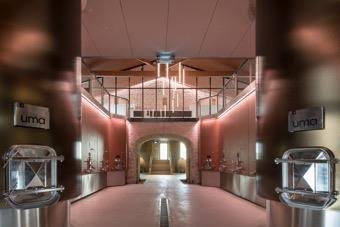
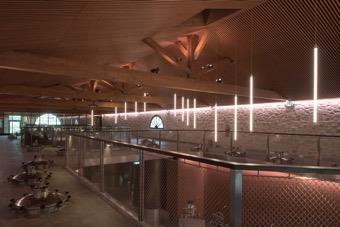
Between traditional and contemporary materialsAn architectural tool serving the wines, and a place for receptions.
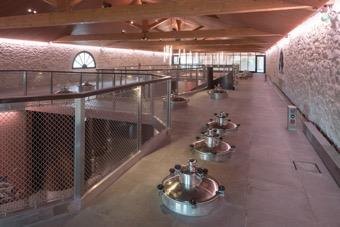
Limestone from the nearby old quarry is showcased, then balanced by the concrete and stainless steel of the vat room, the timber ceiling cladding and the glass of the two terraces overlooking the cellar. Curves, undulations and roundness complete the whole.
Technology is everywhere without ever being visible. Gravity allows a gentle filling of the vats, and each tank is temperature-controlled to the degree.
Architecture: Florence Clausel-Borel. Lighting and scenography: Sara Castagné, Concepto agency. Landscape: Philippe Deliau, Atelier Lieux et Paysages.